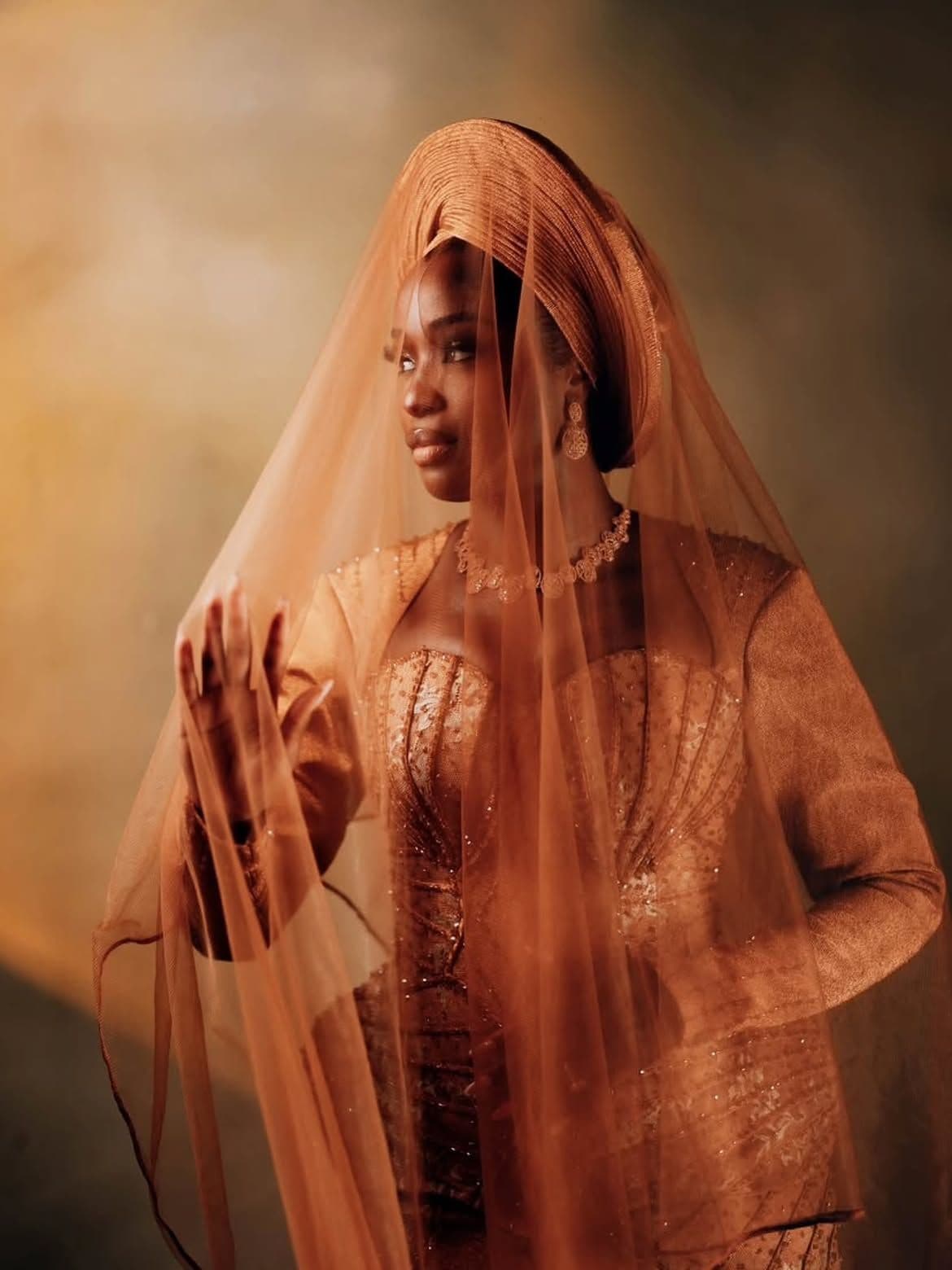
The look
THE ARCHITECTURE OF VEIL AND SILHOUETTE
02:00 mins . by Odiase Amy . Oct 1st 26
photography by @tosinjoshweddings
The late afternoon light spills across the glass-topped cutting tables of the Victoria Island bridal atelier, illuminating forty yards of crisp ivory silk organza, French chantilly lace, and delicate hand-loomed tulle. There is an almost reverent hush in the fitting suite as two senior embroiderers, their fingers silvered by metallic thread, carefully pin the final sheer tier of a custom three-meter cathedral veil onto a mannequin.
At the center of the podium stands Morayo, taking in her reflection. She is wearing a gown that feels equal parts historical romance and modern sculpture, a gown where every pleat, internal seam, and sheer overlay serves a deliberate structural purpose. As she steps forward, the dramatic train sweeps effortlessly behind her, trailing yards of delicate embroidery that subtly tells the story of her lineage in thread.
This is the new era of bridal couture, an era defined by the architecture of veil and silhouette, where fluid drama meets engineering precision to completely redefine what it means to make an entrance.
The Interplay of Structure and Sheerness
For decades, dramatic bridal silhouettes relied on dense, suffocating layers of heavy petticoats, stiff crinolines, and rigid internal boning. While impressive, these traditional constructions often restricted the bride's movement, creating a stiff posture and weighing her down under the heat of tropical outdoor ceremonies.
Today’s leading bridal designers are dismantling that heavy approach in favor of a dynamic contrast: pairing featherlight, sheer organza and illusion tulle with exposed, architectural corsetry. Instead of hiding the internal support beneath heavy layers of opaque satin, modern ateliers are celebrating the construction itself as a central design element.
Exposed boning channels, precision-cut basque waists, and semi-sheer corsets create a sculpted, snatched core that holds the wearer firmly in place. This strong foundation allows the skirt and train to erupt in weightless, sweeping volume without adding unnecessary bulk around the hips.
The secret to this modern drape lies in structural edge-engineering. By utilizing ultra-light horsehair braid discreetly stitched along the hemlines of sheer organza overlays, designers give thin, fluid fabrics a memory of their own. The hem rolls, ripples, and holds its dramatic shape with every step, preventing soft fabrics from collapsing inward, clinging ungracefully, or catching on heels as the bride glides down the aisle.
Written in Thread: The Narrative Cathedral Veil
If the gown provides the sculpted physical silhouette, the veil delivers the emotional, cinematic crescendo. The modern cathedral veil has evolved far beyond a plain piece of soft netting anchored to a hair comb; it has become a canvas for deep personal narrative and heritage storytelling.
Bridal ateliers are experiencing a dramatic rise in requests for hand-embroidered proverbs, ancestral blessings, wedding dates, and personal vows stitched directly along the trailing edges of sheer silk tulle.
Using fine bullion threads, seed pearls, and glass micro-beading, embroiderers frame the veil’s border with delicate calligraphy that remains soft and understated when folded, but becomes fully legible as the veil unfolds across the aisle. As the bride moves, the sheer fabric catches the ambient light, suspending these sacred words in mid-air behind her, a literal mantle of blessing accompanying her toward the altar.
Technique here is paramount. The embroidery must be weight-balanced so that the sheer tulle drapes smoothly across the floor without buckling under the weight of the threadwork or pulling uncomfortably at the bride's headpiece.
The Transformation: From Ceremony Drape to Reception Cape
One of the greatest historical challenges of a dramatic cathedral veil or extended train has been the transition from the solemnity of the ceremony to the energy of the reception dinner. Historically, brides were forced to bustle heavy trains with complex button systems that altered the dress silhouette, or detach their veils entirely, abandoning their signature dramatic look before entering the reception hall.
Modern bridal couture solves this logistical friction through modular design: transitioning the traditional veil into a sheer architectural cape or detachable shoulder veil.
Discreet, invisible magnetic clasps or micro-hooks embedded beneath the shoulder seams of the corset allow a dramatic cathedral-length veil to be re-anchored at the collarbones or upper back after the vows. Within seconds, the veil transforms into a sweeping, open-front cape that frames the arms and back without dragging awkwardly on the dance floor. This grants the bride complete freedom of movement while retaining her ethereal, high-fashion silhouette through the late hours of the celebration.
The Verdict
The modern veil and silhouette are no longer passive garments worn merely out of habit or tradition; they are active expressions of art, movement, and individual identity. By marrying structural corsetry with gossamer-light textiles and narrative embroidery, today’s brides are stepping down the aisle wrapped in drama, grace, and weightless strength.
NEXT READ

The Agbada Redefined
Plan Your Dream Wedding with Ease
Give your wedding the unique experience it deserves