The fitting room at the Victoria Island atelier is pin-drop quiet, save for the rhythmic, metallic snip of heavy brass shears slicing through forty-yard bolts of high-density silk damask. Sunlight filters through floor-to-ceiling glass, casting long geometric shadows across polished concrete floors where swatches of handwoven Aso-Oke, Swiss lace, and heavy bullion threads are laid out like architectural blueprints.
In the center of the room, elevated slightly on a low mahogany podium, stands Tunde. He is a groom three weeks shy of his traditional nuptials, but in this moment, he is not merely trying on a garment. He is standing inside a complex piece of modern structural engineering. As the master tailor gently drapes the heavily embroidered shoulder wing over his frame, there is a distinct, satisfying shift in posture. Tunde’s shoulders square automatically. His chest expands. His chin rises a fraction of an inch.
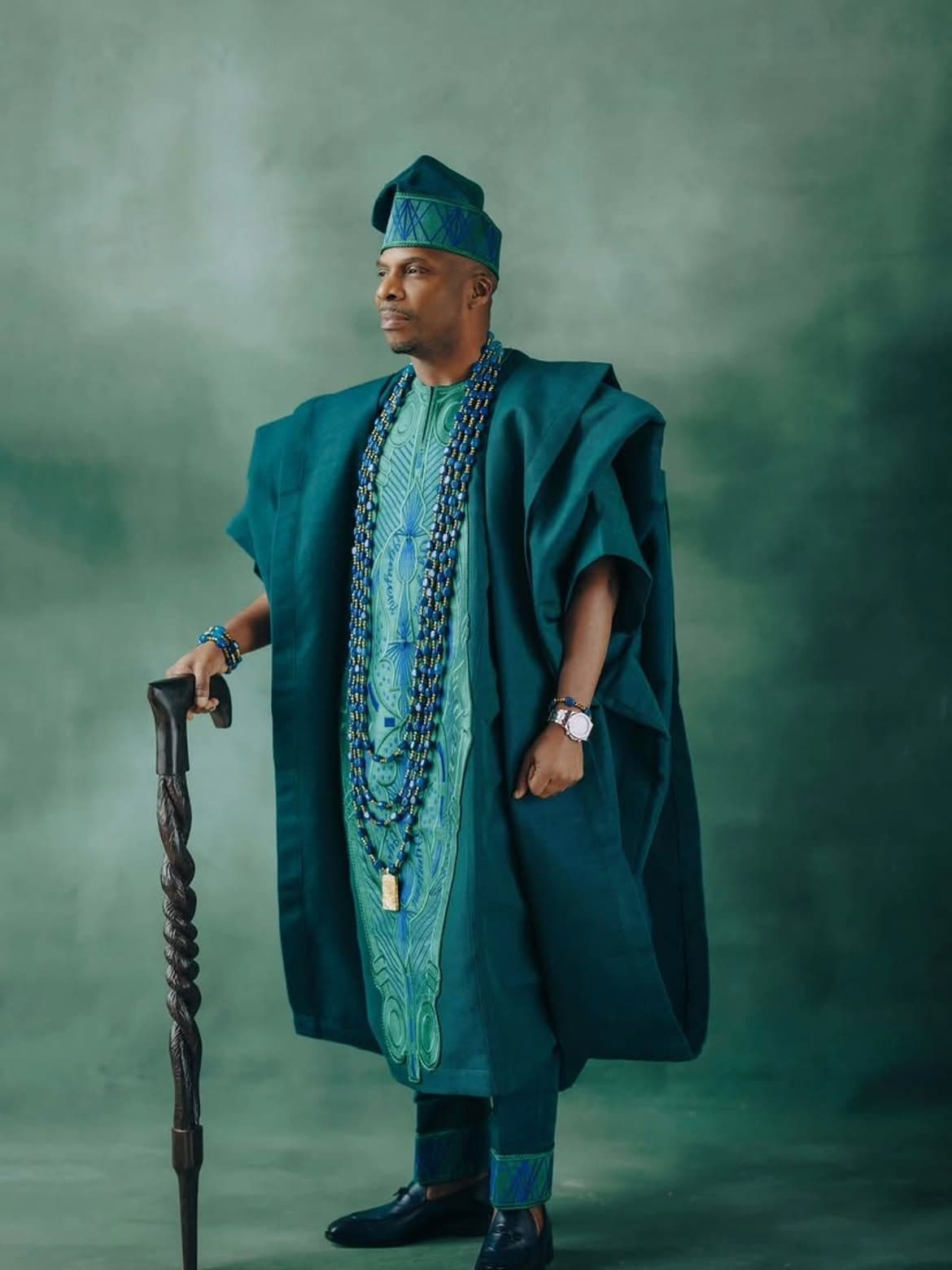
This is the indisputable power of the modern, bespoke Agbada, a traditional garment that has transcended its origins as a loose, ceremonial flowing robe to become a canvas of contemporary luxury, architectural rigor, and deeply personal storytelling.
Beyond the Drape: Engineering Architectural Weight
Historically, the grandeur of the Agbada relied almost entirely on sheer, unbridled volume. Yards upon yards of fabric were gathered, folded, and draped over the arms to create presence. The result was certainly majestic, but it came with inherent structural flaws: the wearer was often subsumed in a sea of unguided textile. When a sudden gust of wind blew across an open-air venue, or when the high-energy movements of the ceremonial dance began, the silhouette frequently collapsed into an unstructured bulk. Grooms spent half their wedding day constantly hiking up the slipping wings of their robes, sacrificing poise for fabric management.
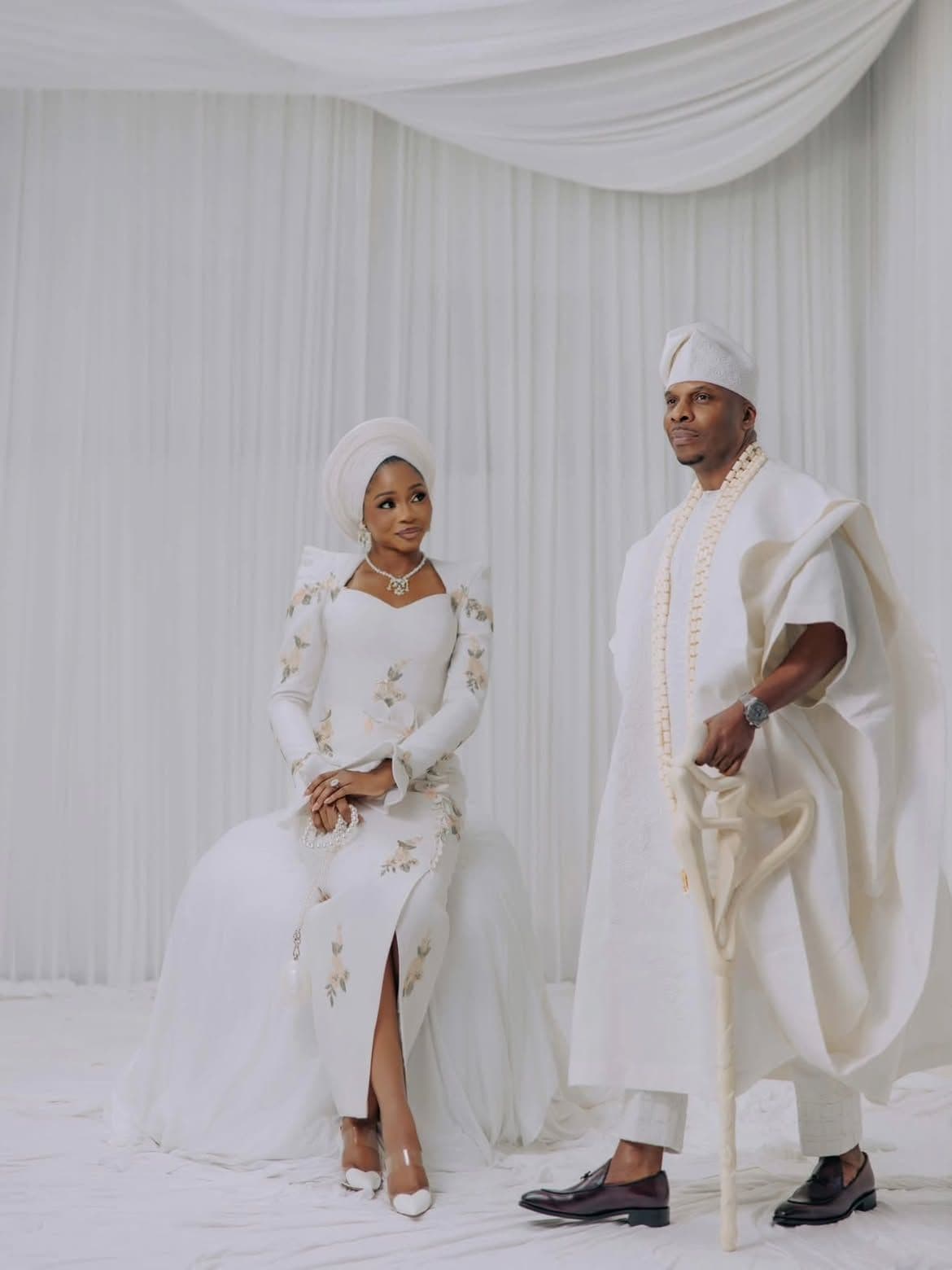
Today’s sartorial revival rejects mere volume in favor of deliberate structure. Modern master tailors approach the traditional three-piece ensemble, the Awotele (the inner long-sleeved tunic), the Sokoto (the tailored trousers), and the Agban (the expansive outer robe), with the exacting precision of Savile Row bespoke suit makers.
An Agbada should never look like it was thrown over a coat hanger; it should look like an architectural monument built specifically for one unique body.
The secret behind this modern revolution lies in internal shoulder canvassing. By discreetly inserting lightweight, high-resilience structured interfacings within the wing seams and neckline, the outer robe maintains a crisp, razor-sharp line from the nape of the neck down to the elbow. The shoulders hold their ground firmly, granting the groom an unshakeable, regal presence without forcing him to awkwardly adjust or toss the heavy fabric back over his arms throughout the day.
Furthermore, fabric selection has undergone a massive paradigm shift toward materials that offer true drape-density. Instead of lightweight, synthetic polyesters that catch static and cling ungracefully to the legs, high-end ateliers are turning to specialized luxury textiles:
- Heavyweight Swiss Hand-Cut Cottons: Exceptionally breathable in humid tropical climates, yet woven with enough structural weight to fall in clean, straight lines straight to the ankle.
- Double-Faced Silk Brocades: Offering a subtle, sophisticated luster under professional venue lighting while holding rigid, sculpted folds along the sleeve line.
- Refined Native Aso-Oke: Hand-loomed with ultra-fine gauge metallic and silk threads, providing rich ancestral texture without the scratchy, stiff discomfort of historical weaves.
The New Lineage: Monogramming and Personal Crests
If the precision of the cut provides the physical frame, the embroidery delivers its living soul. Standard, off-the-shelf motif patterns and generic factory stampings are rapidly becoming obsolete for the discerning groom. In their place is the meteoric rise of bespoke monogramming, family heraldry, and personalized symbolic embroidery.
Where traditional embroidery relied on repetitive geometric shapes meant simply to fill space, today's custom designs tell the couple's personal origin story thread by thread. Grooms now spend months collaborating directly with graphic designers, cultural historians, and master embroidery artists before the first cut of fabric is made.
Ancestral heraldry is at the forefront of this trend. Ateliers are fusing the groom’s and bride’s individual family heritage symbols into a single, unified heraldic crest. Positioned prominently at the center chest or discreetly at the nape of the neck, this crest transforms the garment into a permanent family heirloom.
Equally compelling is the rise of micro-embroidered hidden sentiments. Wedding dates, the exact geographical coordinates of where the couple first met, or short excerpts of private vows are micro-stitched into the inner lining of the Awotele, completely invisible to wedding guests and photographers, but pressed directly against the wearer's chest over his heart.
Technique has evolved alongside narrative. Modern artisans are combining matte silk threads with high-gloss metallic bullion wire and French-knot techniques. This creates a multi-layered, three-dimensional tactile depth that catches natural sunlight during outdoor ceremonies and responds dramatically to indoor videography lenses.
Monochromatic Mastery: The Art of Tonal Uniformity
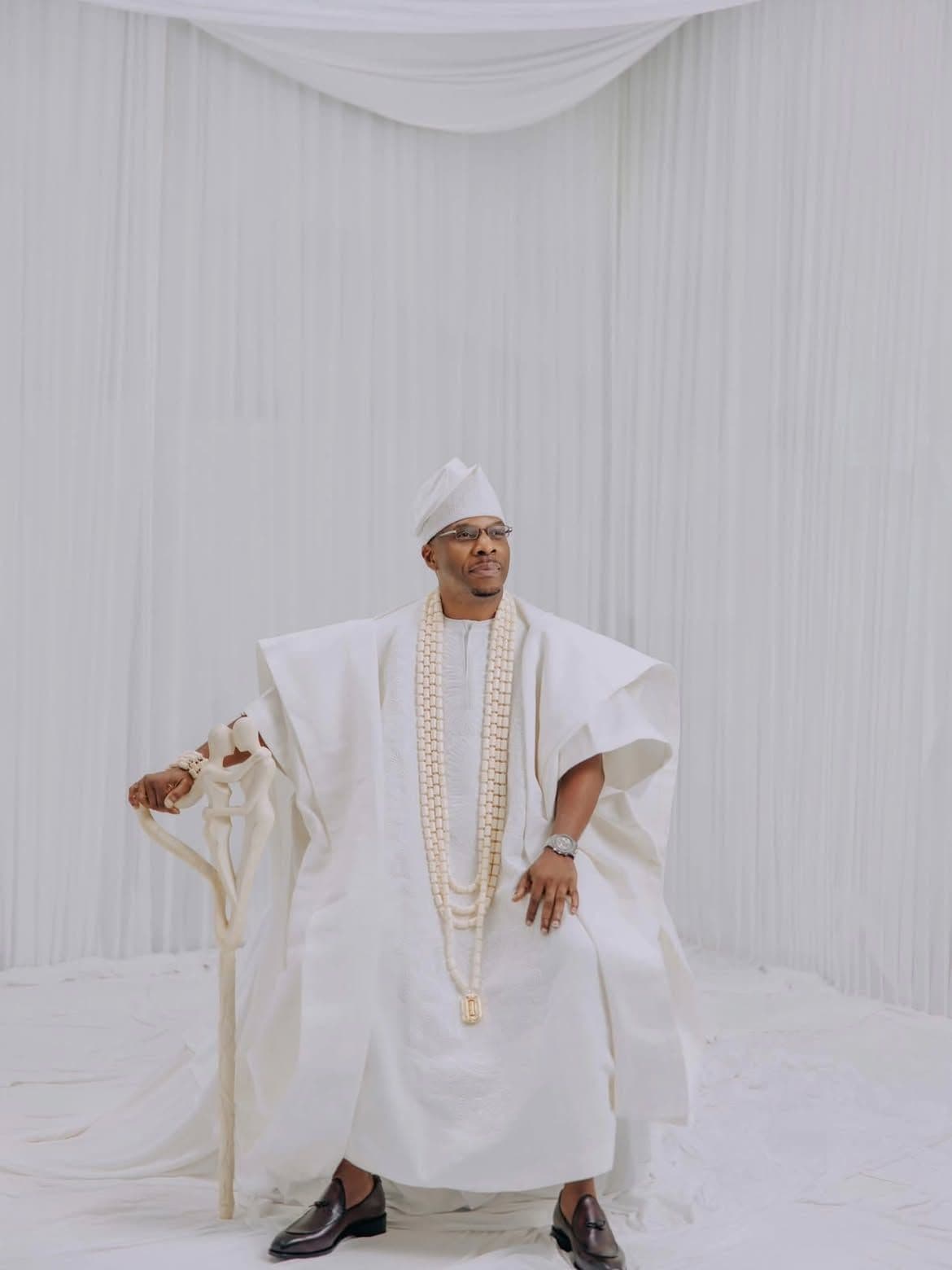
Alongside structural advances, the color palette of the modern Agbada has embraced a sleek, editorial restraint. The era of high-contrast, clashing threadwork, such as bright gold embroidery on stark white cloth, is yielding to the sophisticated elegance of monochromatic styling. Today's aesthetic focuses on a single, elevated tone executed masterfully across every layer of the attire.
Rich midnight navy, warm desert sand, deep forest green, and muted slate gray have become the new staples. Rather than breaking up the silhouette with contrasting thread colors, embroidery is executed in threads that are precisely half a shade lighter or darker than the base fabric itself.
When a groom steps out in a midnight-navy Agbada featuring tonal navy embroidery, the visual impact is subtle yet deeply commanding. Instead of the eye being distracted by loud patterns, the viewer immediately notices the impeccable quality of the tailoring, the rich texture of the cloth, and the powerful stature of the man wearing it.
To complete this seamless editorial vision, accessories are no longer treated as secondary afterthoughts:
- Bespoke Footwear: Handcrafted velvet loafers, Belgian slippers, or leather mules are custom-dyed to match the exact Pantone shade of the robe, eliminating visual break at the ankle.
- Molded Headwear: The Fila (the traditional cap) is no longer made from soft, collapsible off-cuts. It is built over traditional wooden block moulds, ensuring it stands crisp, angled, and immaculately structured without slumping or losing its shape across an eight-hour celebration.
The Verdict
The modern Agbada has successfully shed its reputation as merely traditional ceremonial attire to claim its rightful place in the pantheon of global high fashion. By harmonizing ancestral heritage with precision structural tailoring, internal canvassing, and bespoke personal symbolism, today’s grooms are doing far more than dressing for a wedding day. They are stepping into a sculpted, personal legacy designed to endure for generations.
NEXT READ
The Unspoken Contract
Plan Your Dream Wedding with Ease
Give your wedding the unique experience it deserves