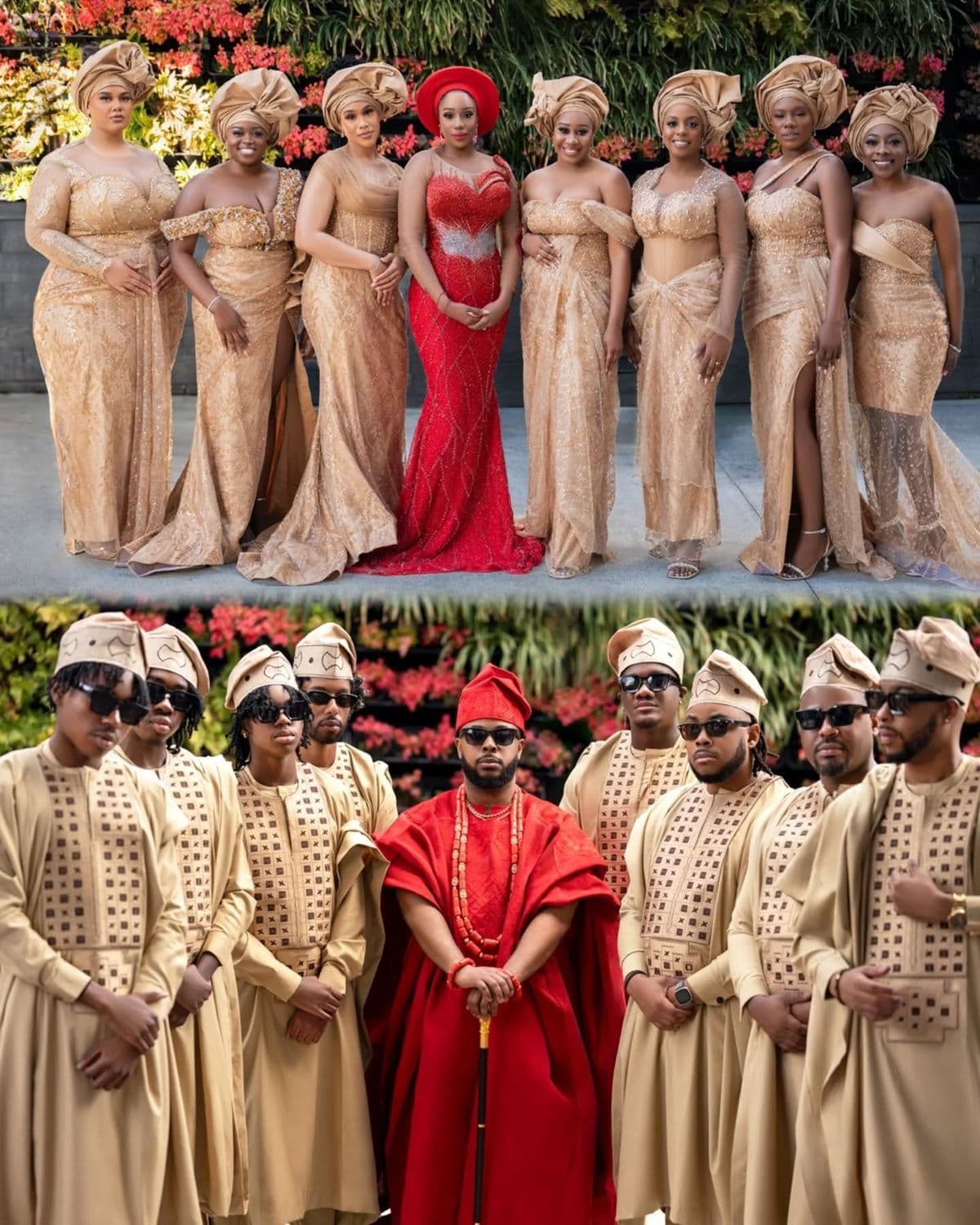
The look
NIGERIAN TRADITIONAL WEDDING AESTHETICS
02:00 mins . by Odiase Amy . Jun 10th 26
Atta Junior production
Traditional wedding attires are a breathtaking celebration of heritage, identity, and elegance, serving as a visual masterpiece of cultural pride. Across diverse ethnic groups, couples blend rich fabrics, royal coral beads, and symbolic accessories to honor their lineage while embracing modern sophistication. More than just fashion, these garments tell a story of community, love, and the enduring beauty of tradition.
1. Delta State Traditional Wedding Aesthetics (Urhobo, Isoko, Itsekiri & Anioma)
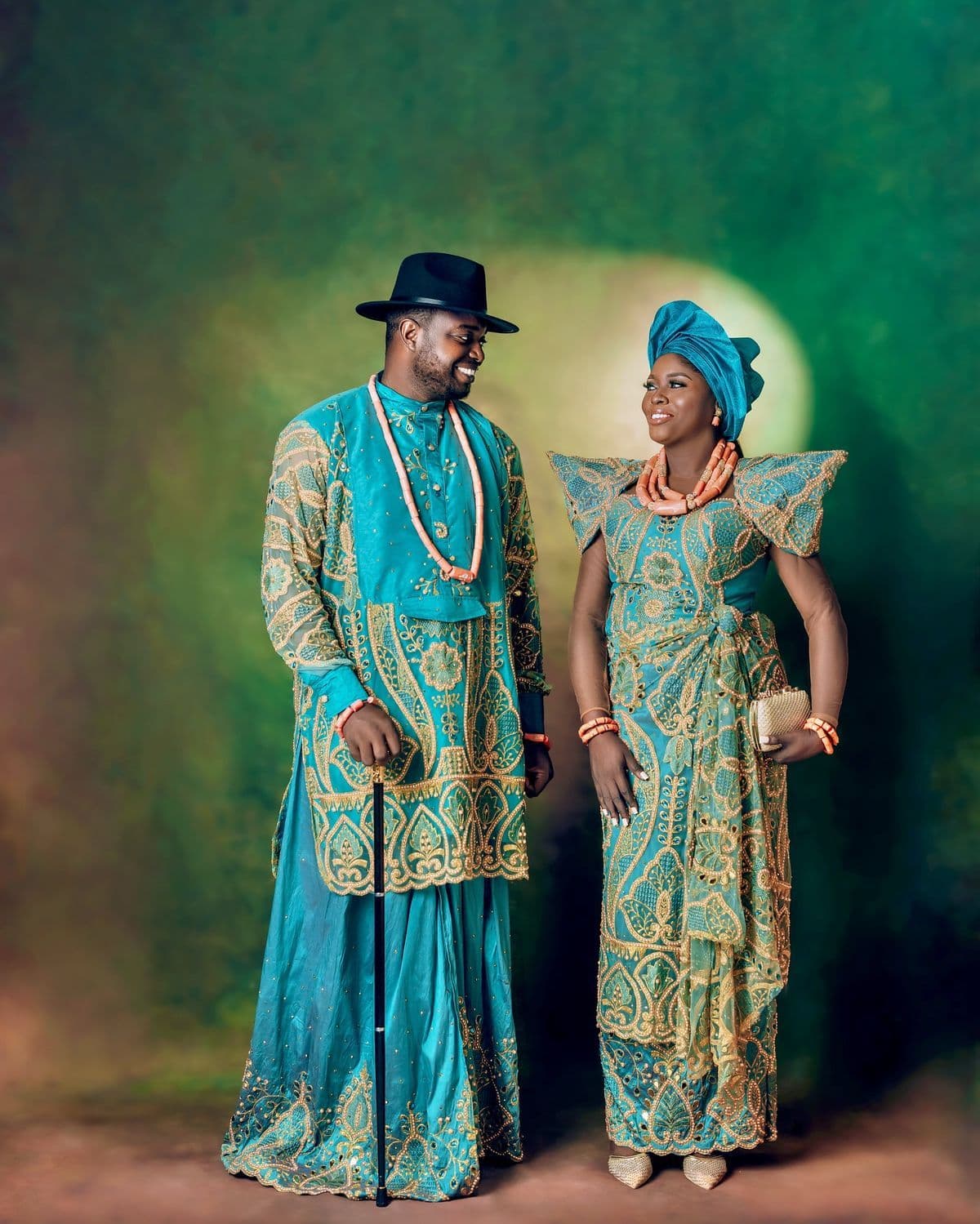
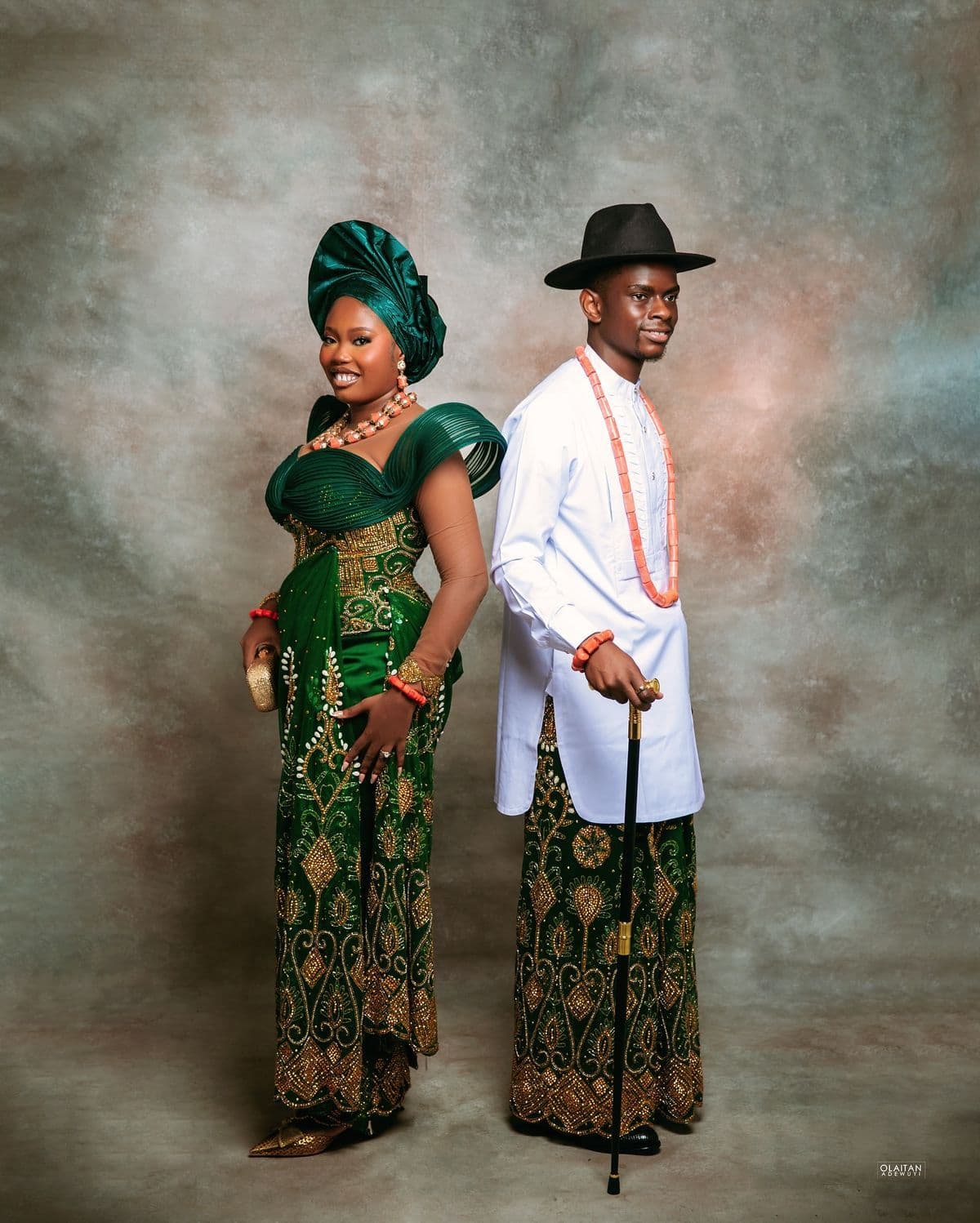
Wedding attires in Delta State are a beautiful reflection of culture, identity, and elegance. Because Delta is home to diverse ethnic groups such as the Urhobo, Itsekiri, Isoko, and Anioma people, wedding outfits often vary by tradition. Brides and grooms typically wear richly styled native fabrics, coral beads, wrappers, embroidered outfits, and cultural accessories that showcase heritage and pride. Delta wedding attires are known for their beauty, color, and deep cultural meaning.
Key Style Elements & Visual Identity
- The Bride: Heavily embellished, tailored lace or velvet corset gowns paired with magnificent George wrappers. Completed with an expertly tied headtie (Gele) or a royal coral-beaded crown, a matching feathered hand fan, and a luxury clutch bag.
- The Groom: Classic white long-sleeved native shirts (Ondo or traditional South-South style) worn over a dark green woven or embroidered George wrapper.
- Signature Accessories: Generous coral beads (Ivie) around the neck and wrists symbolizing royalty, a distinct cultural fedora/bowler hat for the groom, and an ornamental walking stick as a traditional symbol of authority.
The Anioma Contrast: While other Delta groups lean into vibrant jewel tones, the Anioma people present a striking contrast. Among the Anioma people, the famous Akwa Ocha (white cloth) is commonly worn during traditional marriage ceremonies, symbolizing purity and cultural identity
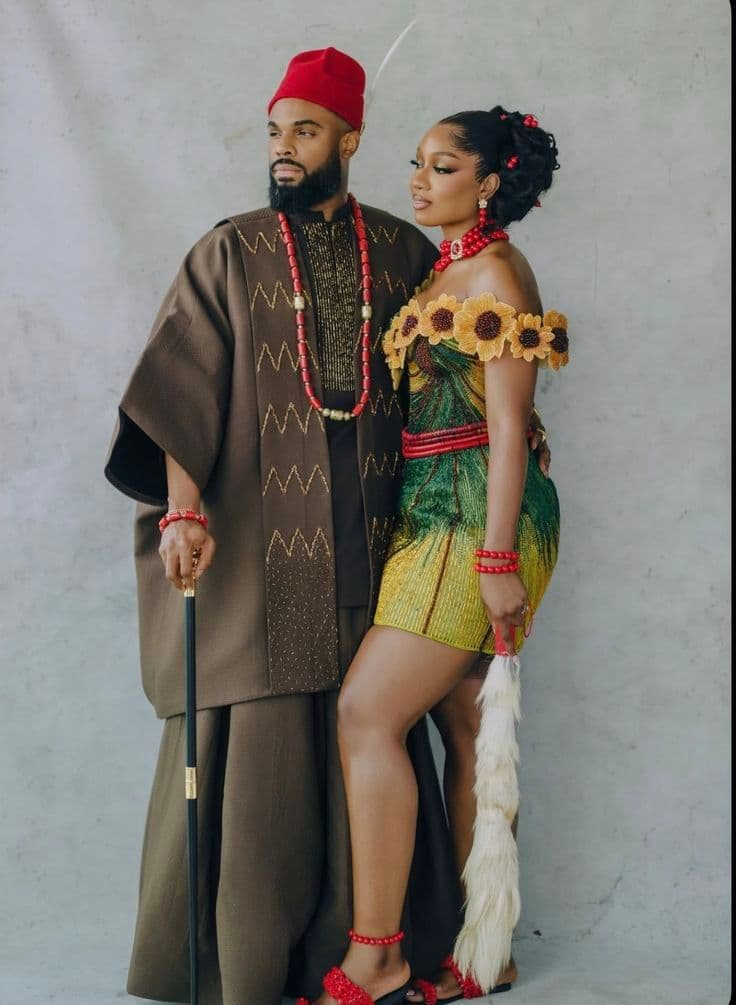
2. Igbo Traditional Wedding Aesthetics (Igba Nkwu)
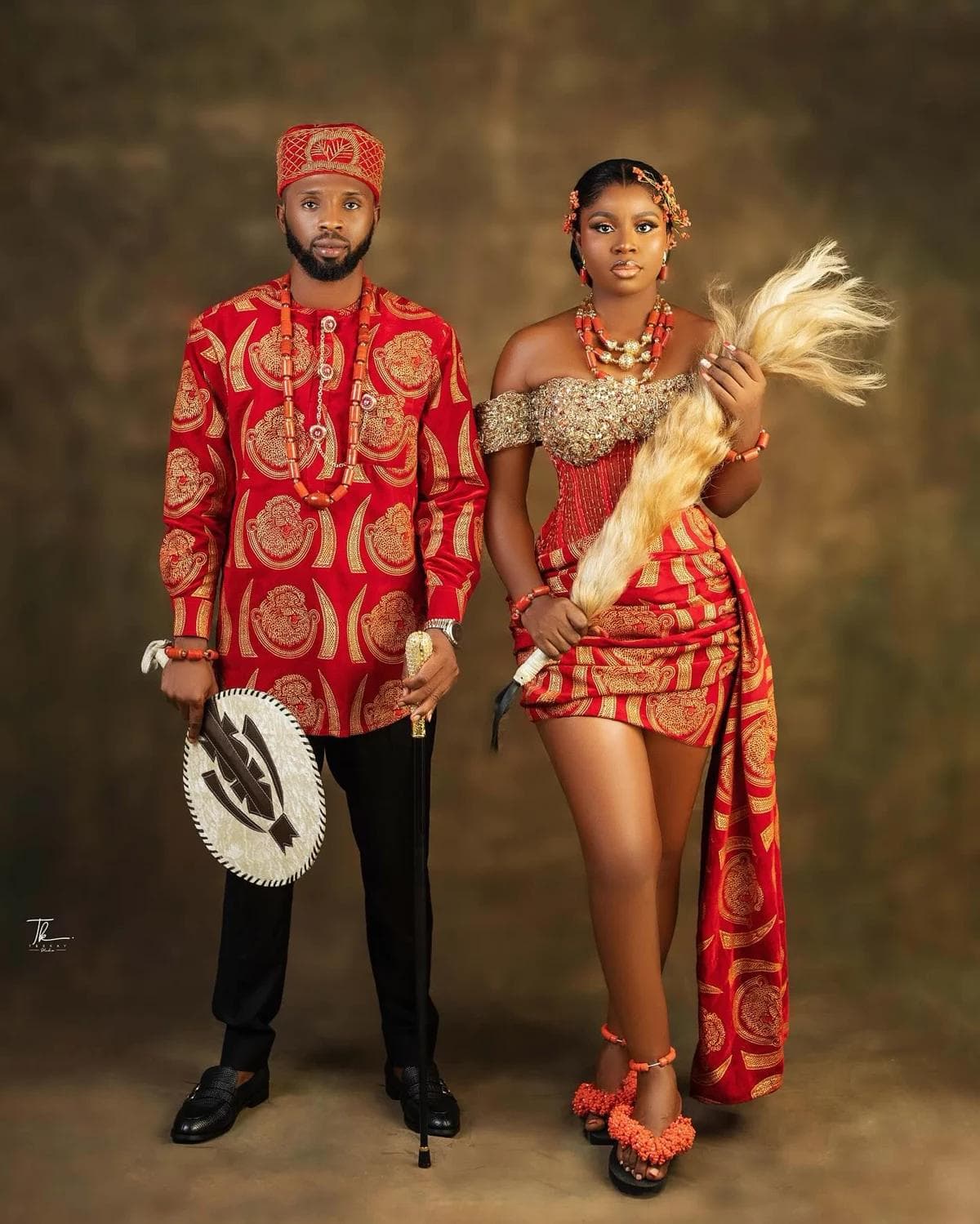
Igbo wedding attires are known for their rich colors, elegance, and deep cultural significance. During traditional marriage ceremonies, brides often wear beautifully crafted blouses, wrappers, coral beads, headpieces, and accessories that symbolize beauty and heritage. Igbo wedding attire beautifully blends tradition with modern fashion, creating a regal and vibrant celebration of identity.
Key Style Elements & Visual Identity
- The Bride: Red is a dominant and deeply significant color in Igbo bridal fashion, frequently paired with richly patterned luxury fabrics such as intricate lace, plush velvet, or heavy George wrappers. Modern brides often style these into structured custom gowns or double-wrapper sets (Akwa Ukwu).
- The Groom: Grooms typically wear traditional outfits like the iconic Isiagu top—a velvet, silk, or brocade fabric patterned with lion heads, symbolizing strength and nobility, cleanly paired with tailored trousers.
- Signature Accessories: Heavy layered coral beads (Ife & Ijele) worn as necklaces, bracelets, and anklets, alongside a striking beaded crown (Okpu Ivie). Grooms wear the cultural red cap (Okpu Agwu) representing honor, accompanied by a decorative walking stick, while brides carry a heavily feathered custom hand fan (Akupe).
3. Yoruba Traditional Wedding Aesthetics (The Yoruba Wedding Aesthetic)
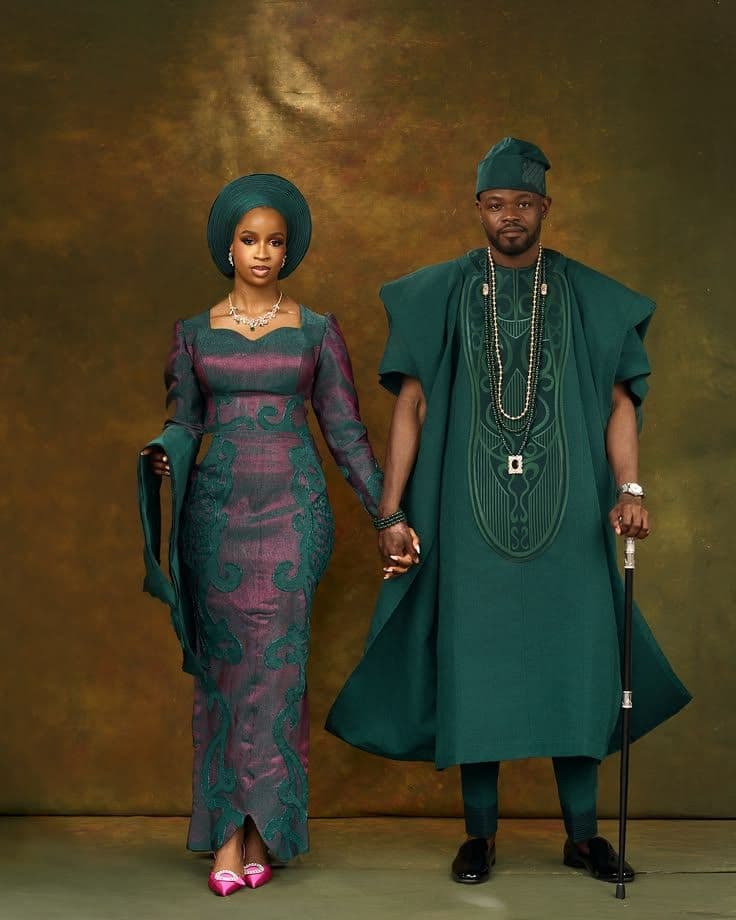
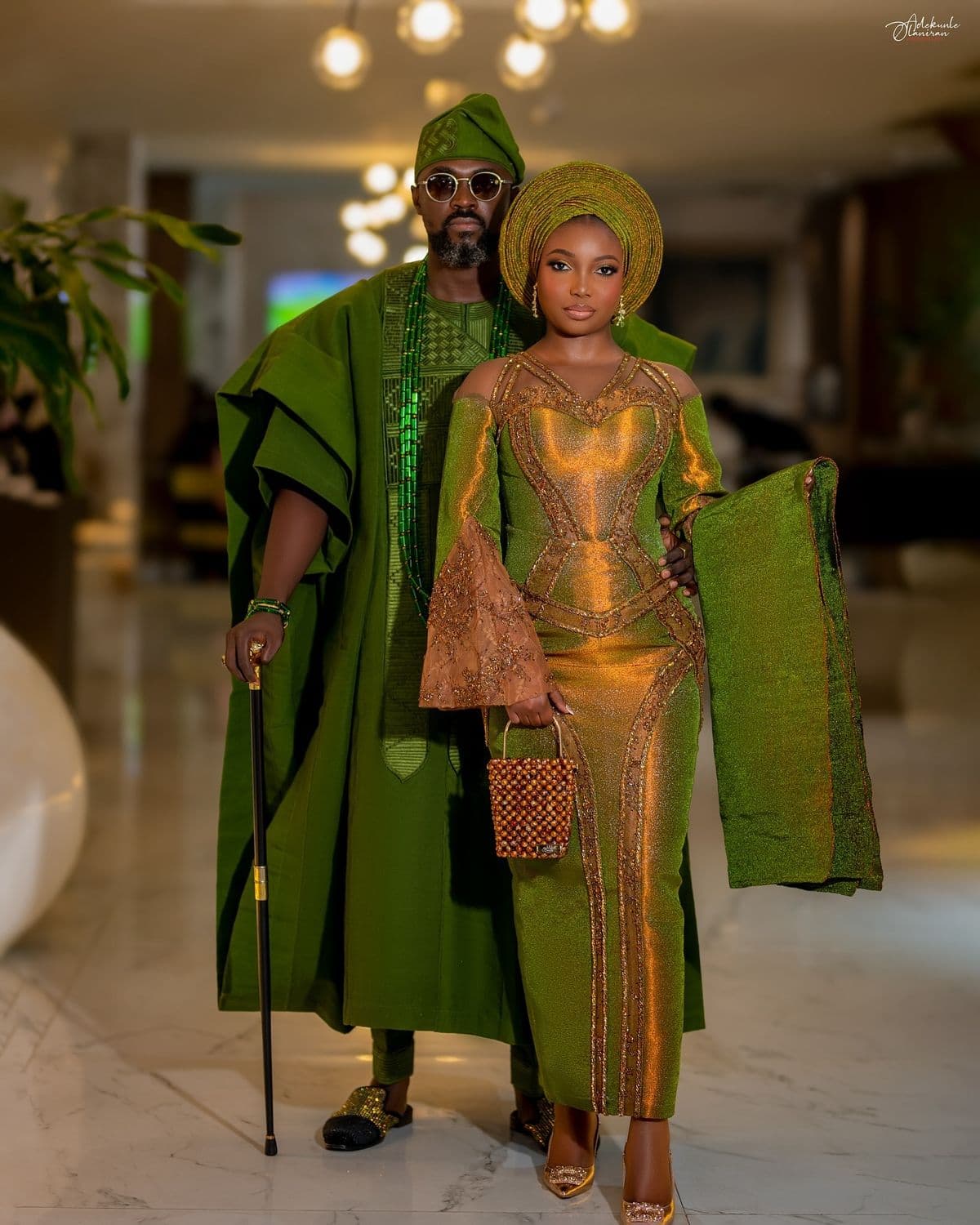
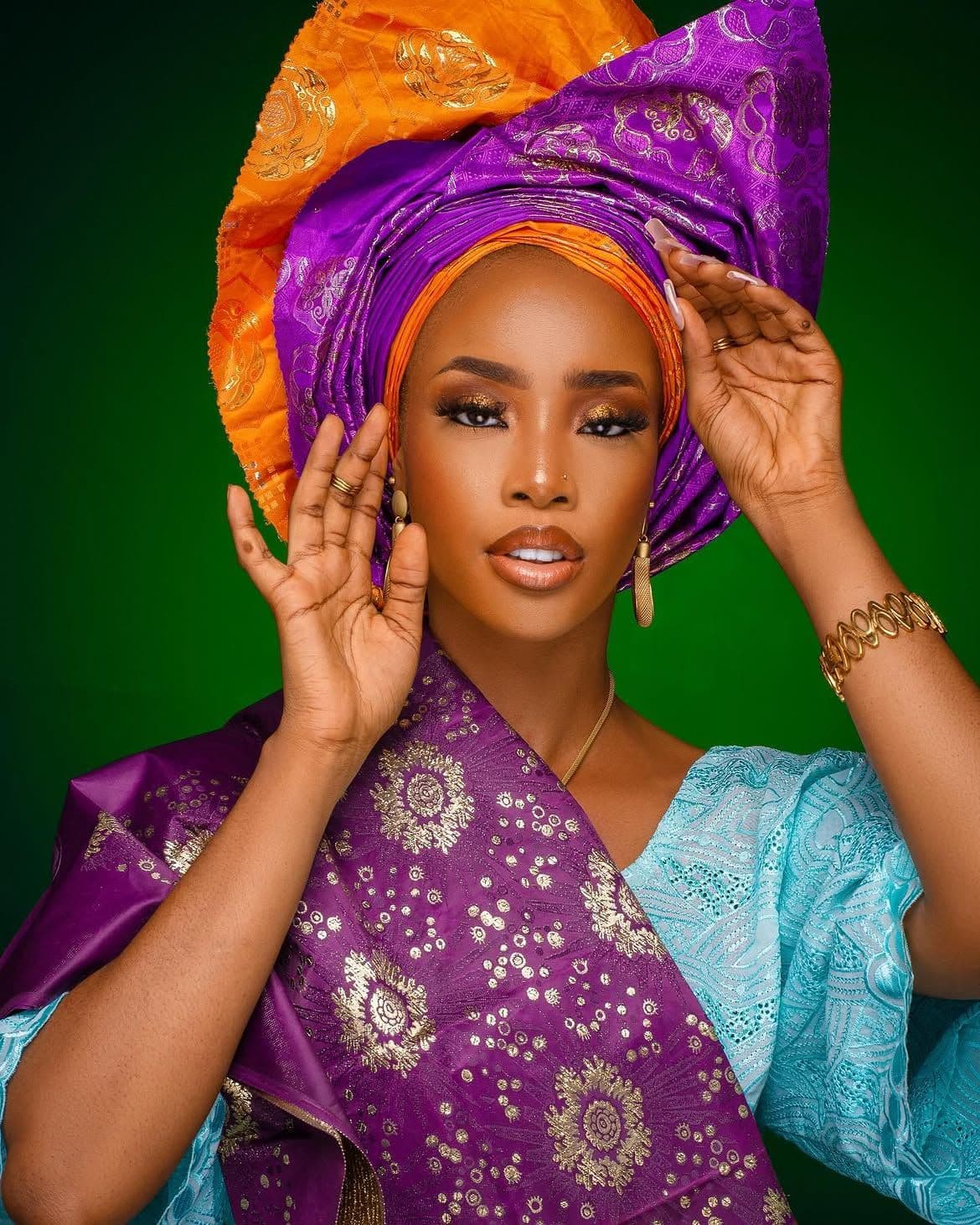
Yoruba wedding attires are celebrated for their elegance, vibrant colors, and rich cultural symbolism. During traditional marriage ceremonies, brides often wear beautifully designed Aso Oke, paired with a neatly styled gele (head tie), beads, and matching accessories that reflect beauty and tradition. These attires beautifully represent heritage, pride, and the joyful spirit of Yoruba celebrations.
Key Style Elements & Visual Identity
- The Bride: The foundational outfit consists of a Buba (blouse) and Iro (wrapper) traditionally woven from Aso Oke (hand-woven fabric), which has evolved into contemporary metallic, textured, and embellished variations. The look is crowned with a statement Gele (headtie) and an Ipele (shoulder sash).
- The Groom: Grooms traditionally wear a majestic, flowing embroidered Agbada robe over a Buba and Sokoto (matching trousers). The outfit is incomplete without the traditional cap known as a Fila (commonly styled as Gobi or Tsaurin).
- Community Integration (Aso Ebi): Coordinated Aso Ebi ("cloth of the family") worn by guests, family, and friends adds unparalleled color, visual harmony, and unity to Yoruba weddings, acting as a massive driver for visual search and trend-setting.
4. Hausa Traditional Wedding Aesthetics
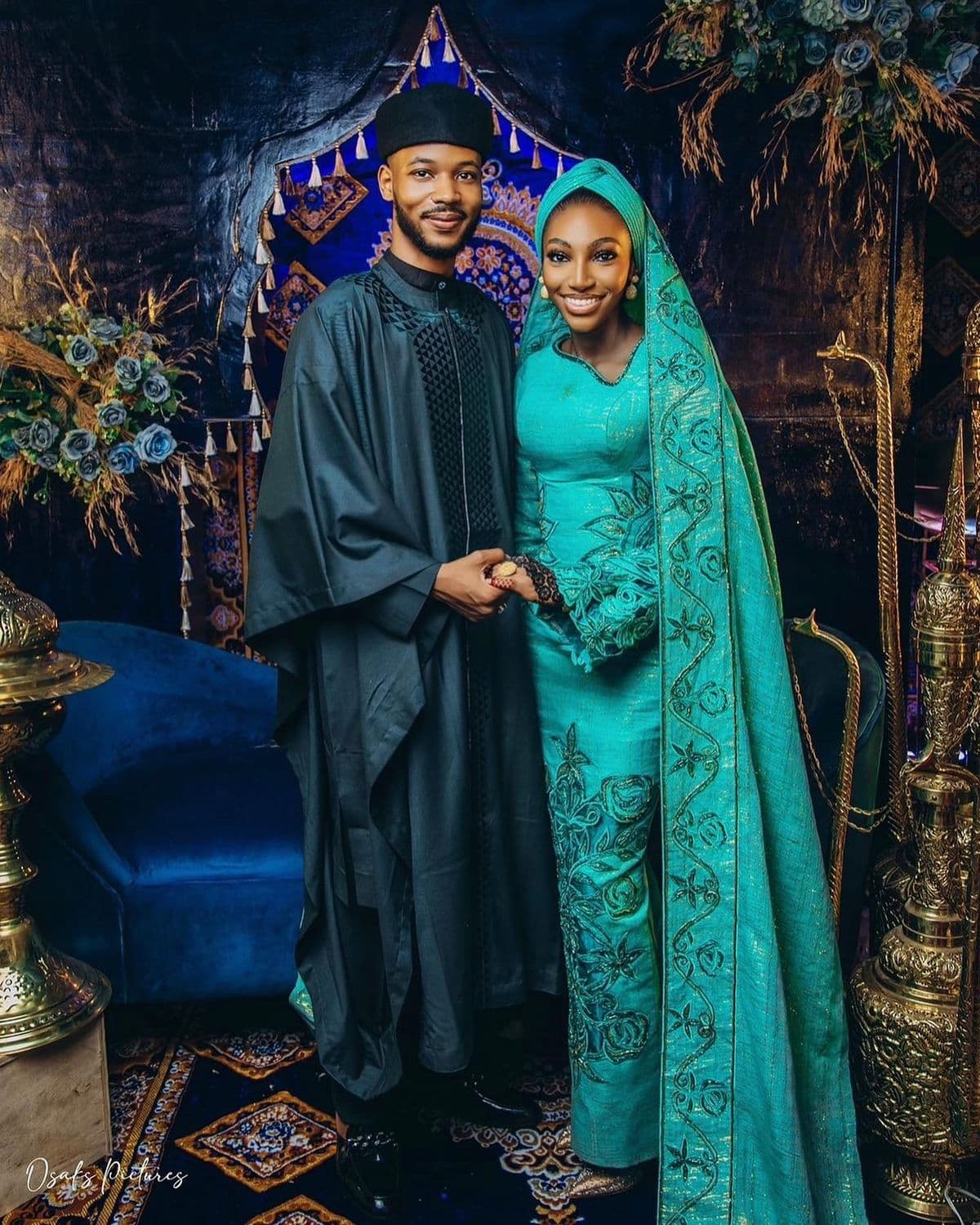
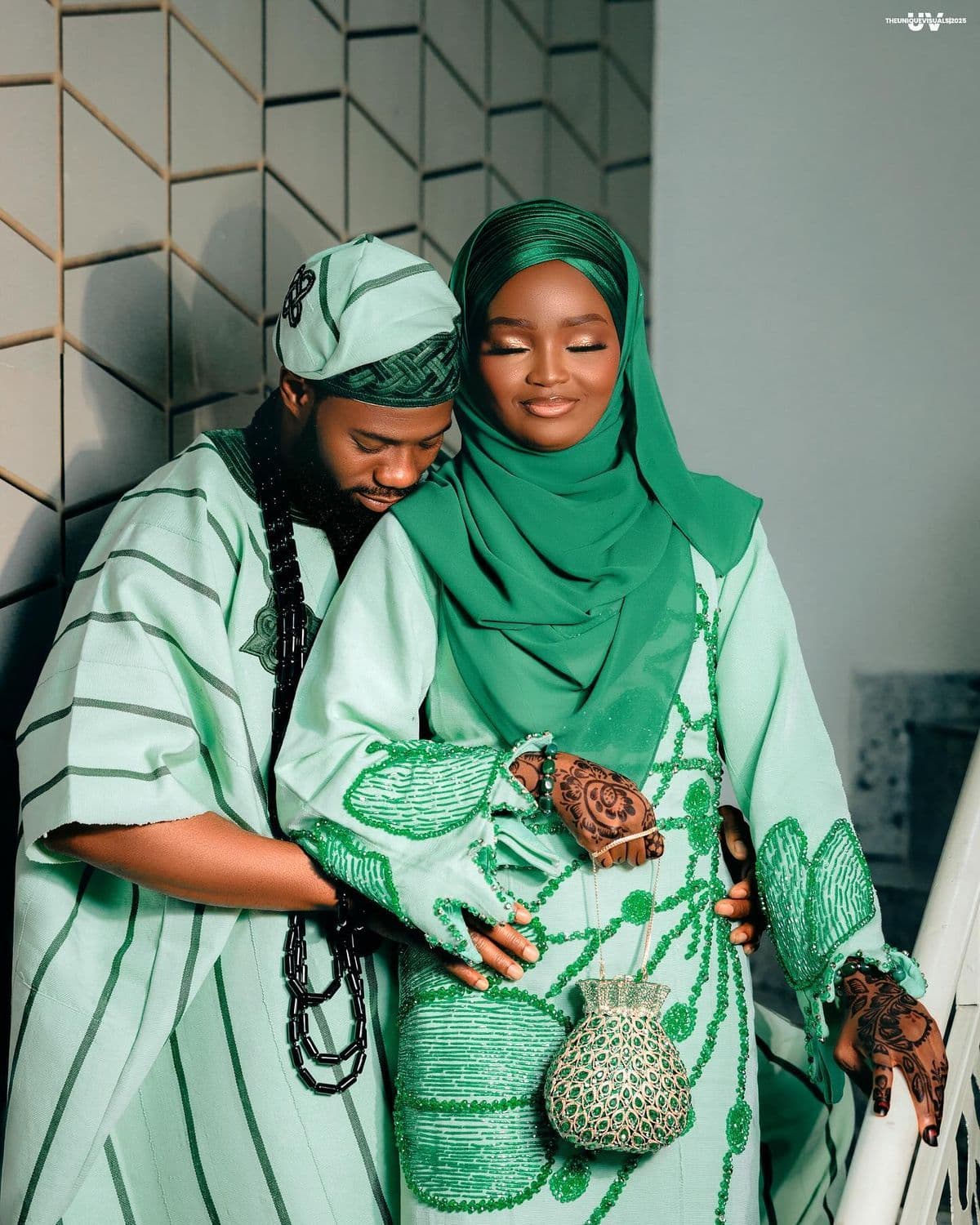
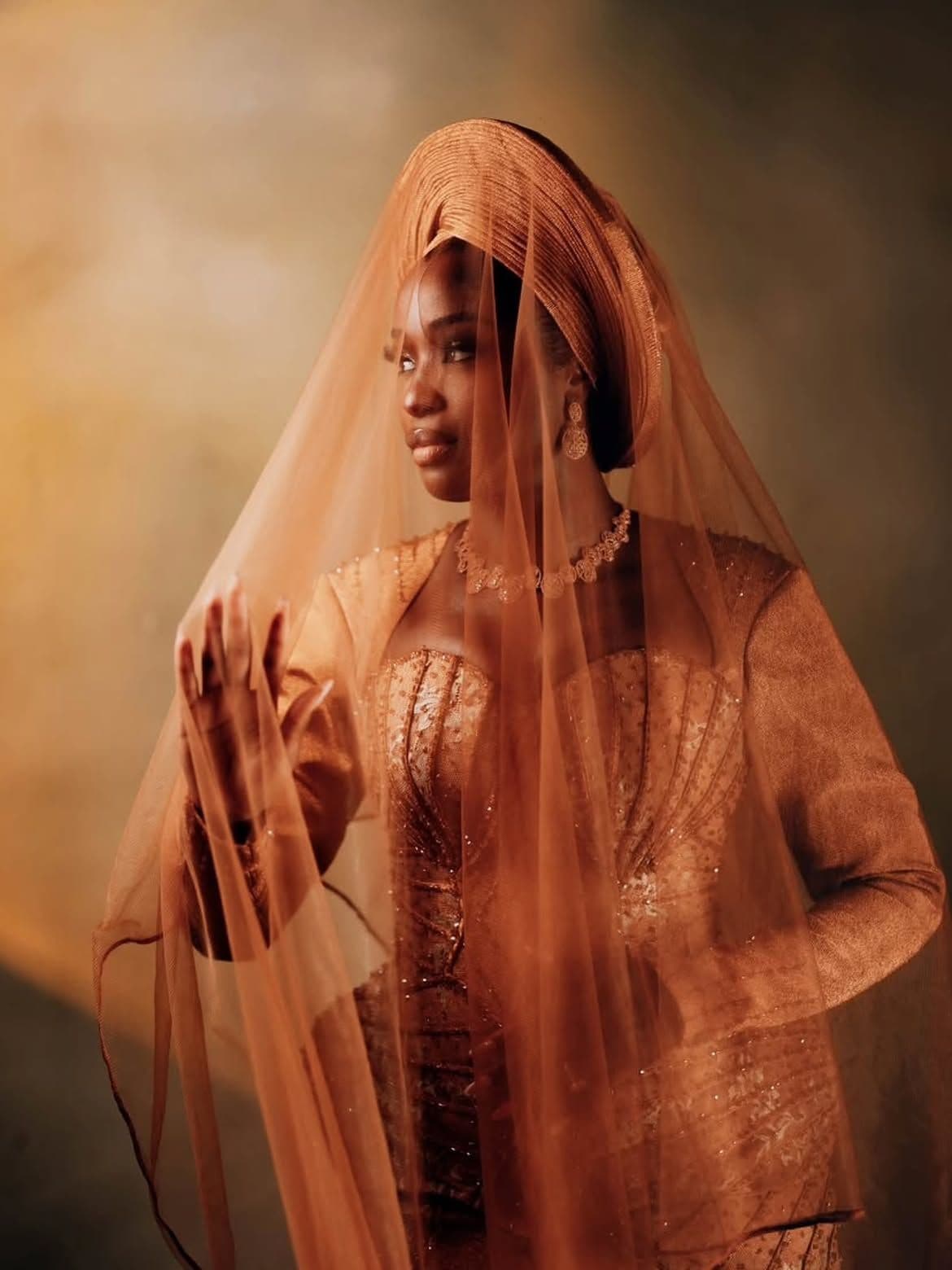
Hausa wedding attires are admired for their elegance, modesty, and cultural richness. Brides often wear beautifully embroidered gowns, flowing veils, and matching head coverings, accessorized with jewelry and intricate henna designs known as lalle. Rich fabrics such as lace, silk, and satin are commonly used, often in vibrant or regal colors. Hausa wedding attire beautifully combines culture, sophistication, and timeless style, making wedding celebrations both graceful and memorable.
Key Style Elements & Visual Identity
- The Bride: Stunning, floor-length embroidered gowns tailored from rich lace, silk, or satin. True to northern heritage, the outfit incorporates a flowing veil (Kyale) and elegant matching head coverings that honor both cultural modesty and royal sophistication.
- The Groom: Grooms traditionally wear handsomely embroidered kaftans or a magnificent, flowing Babban Riga (the northern counterpart to the Agbada), paired with an intricately stitched cap (Hula), reflecting dignity, heritage, and tradition.
Signature Bridal Adornment (Lalle): A core visual identity element for the Hausa bride is the application of Lalle (intricate henna tattoos) on her hands and feet. These dark, elaborate geometric and floral patterns symbolize joy, beauty, and marital blessings.
5. Edo Traditional Wedding Aesthetics (The Royal Benin Aesthetic)
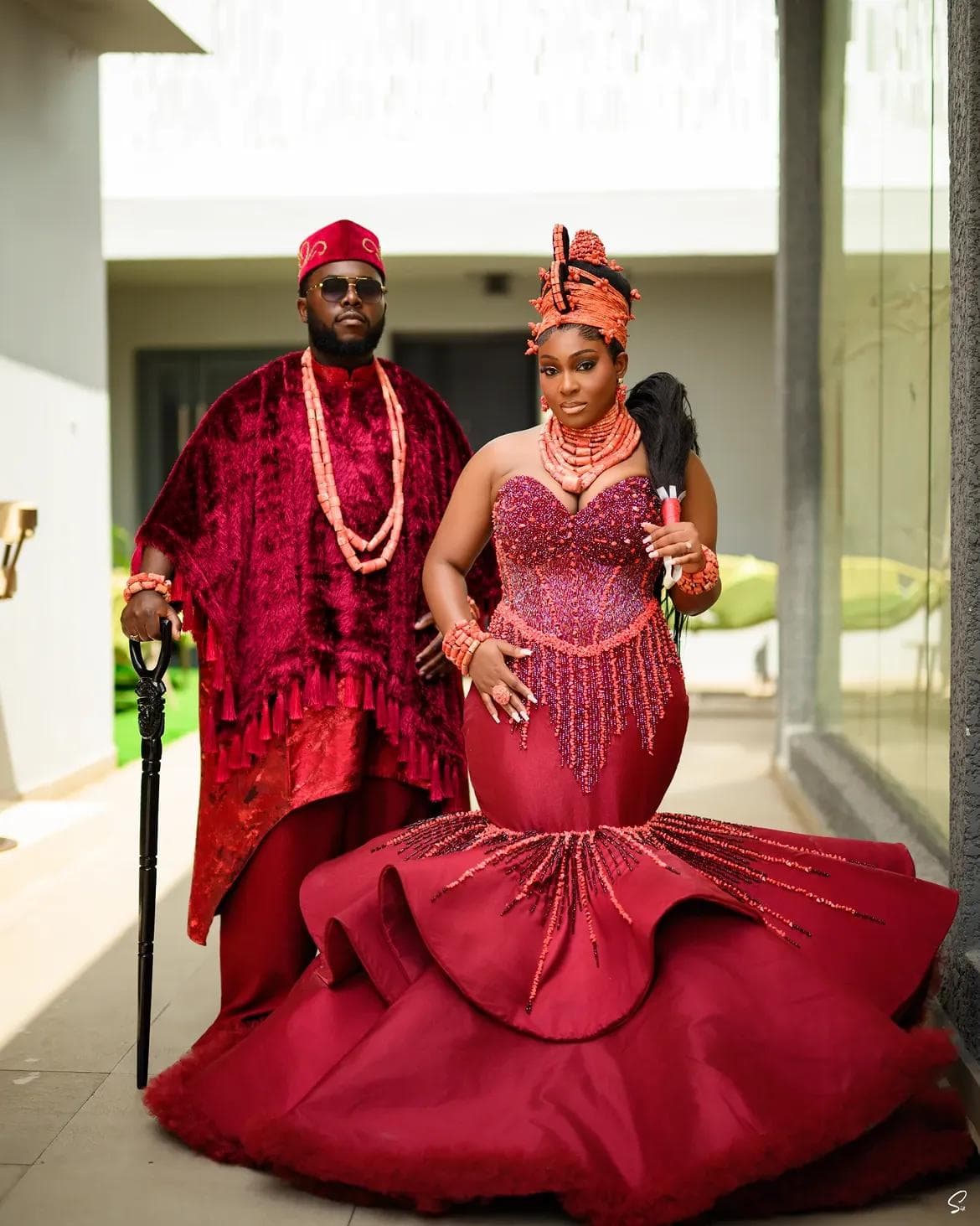
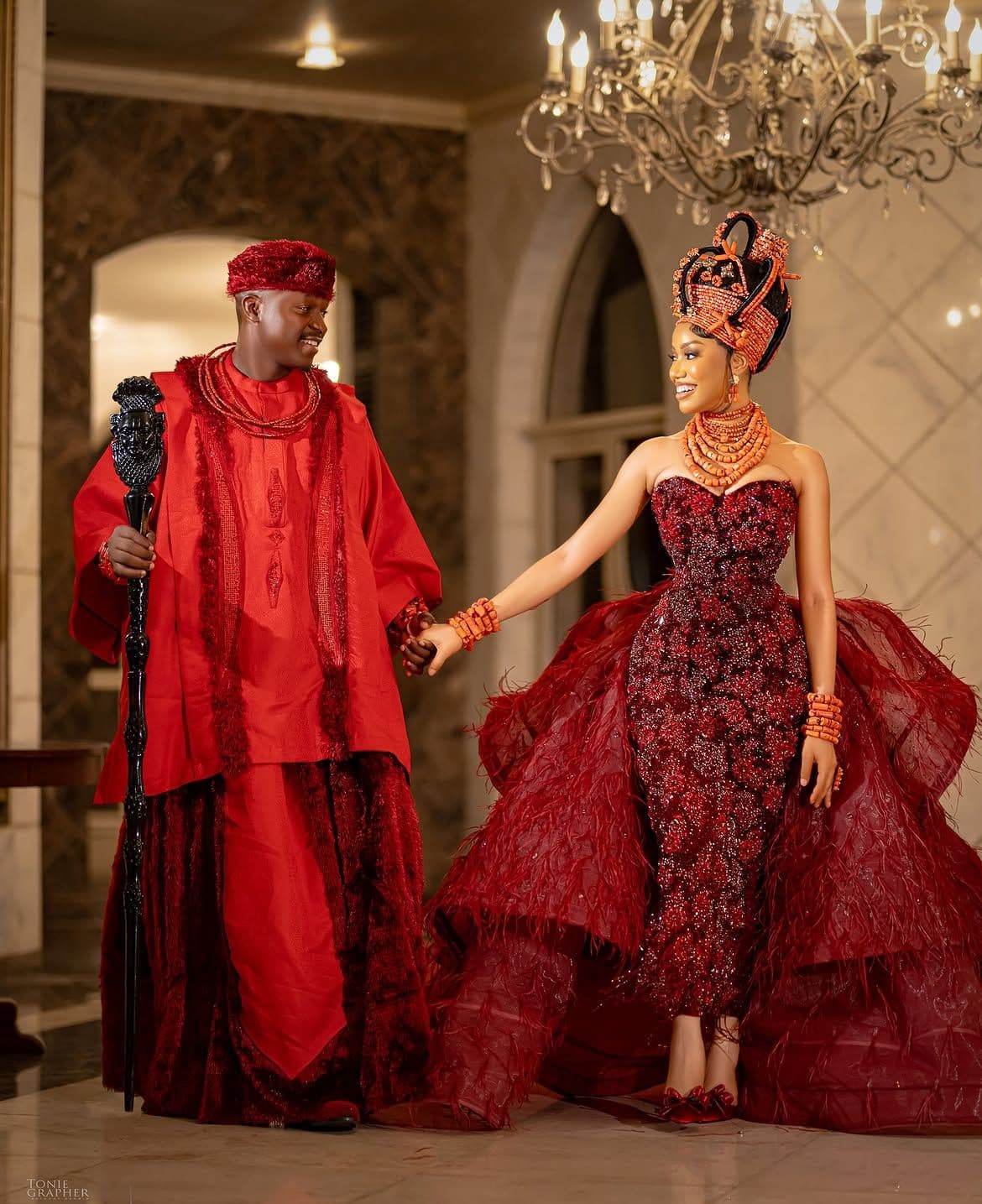
Edo wedding attires are a striking expression of royalty, heritage, and timeless elegance. Rooted in the rich traditions of the Benin Kingdom, these ceremonial looks are defined by luxurious fabrics, regal coral beads, and distinctive accessories that symbolize status, beauty, and cultural pride. Blending centuries-old customs with modern tailoring, Edo wedding fashion transforms every celebration into a vibrant display of history and sophistication.
Key Style Elements & Visual Identity
• The Bride: Edo brides are renowned for their regal appearance, often dressed in richly textured fabrics such as velvet, lace, brocade, or George material, styled into elegant wrappers or contemporary gowns. The look is elevated with layered coral bead necklaces, bracelets, earrings, and the iconic Okuku hairstyle or coral-beaded headpiece, creating a silhouette that reflects the grandeur of Benin heritage.
• The Groom: Grooms traditionally wear finely embroidered native attire or flowing robes in rich, complementary tones, paired with coral bead necklaces and bracelets. A distinctive red cap and ceremonial staff complete the look, symbolizing dignity, leadership, and respect for tradition.
• Signature Accessories: The defining feature of Edo wedding aesthetics is the lavish use of coral beads (Ivie), representing royalty, prosperity, and ancestral heritage. Rich shades of red remain central to the Edo bridal palette, while handcrafted fans, ornate jewelry, and ceremonial accessories add the finishing touches to one of Nigeria's most regal wedding traditions.
NEXT READ
Affordable Ways To Prepare Your...
Plan Your Dream Wedding with Ease
Give your wedding the unique experience it deserves